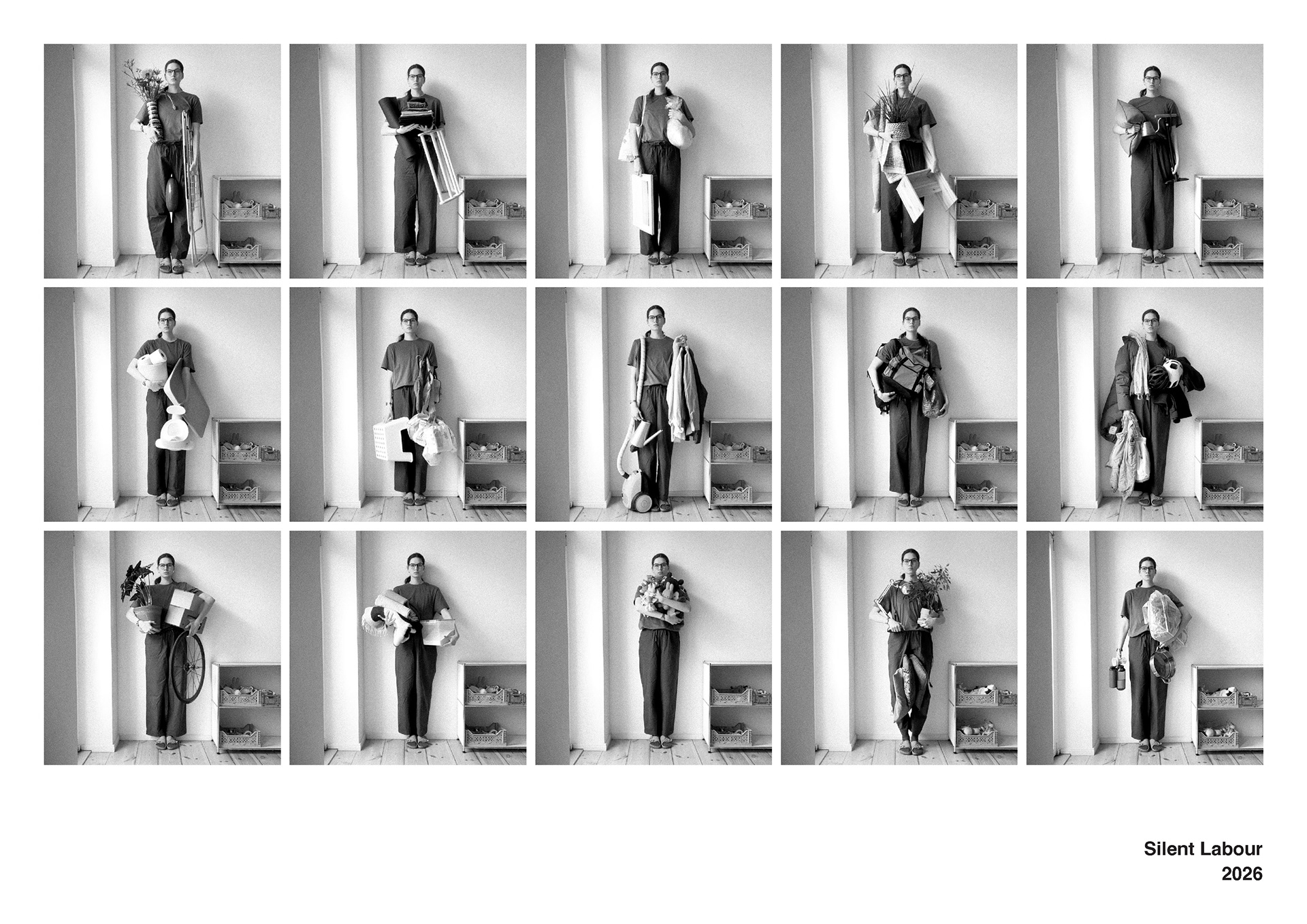
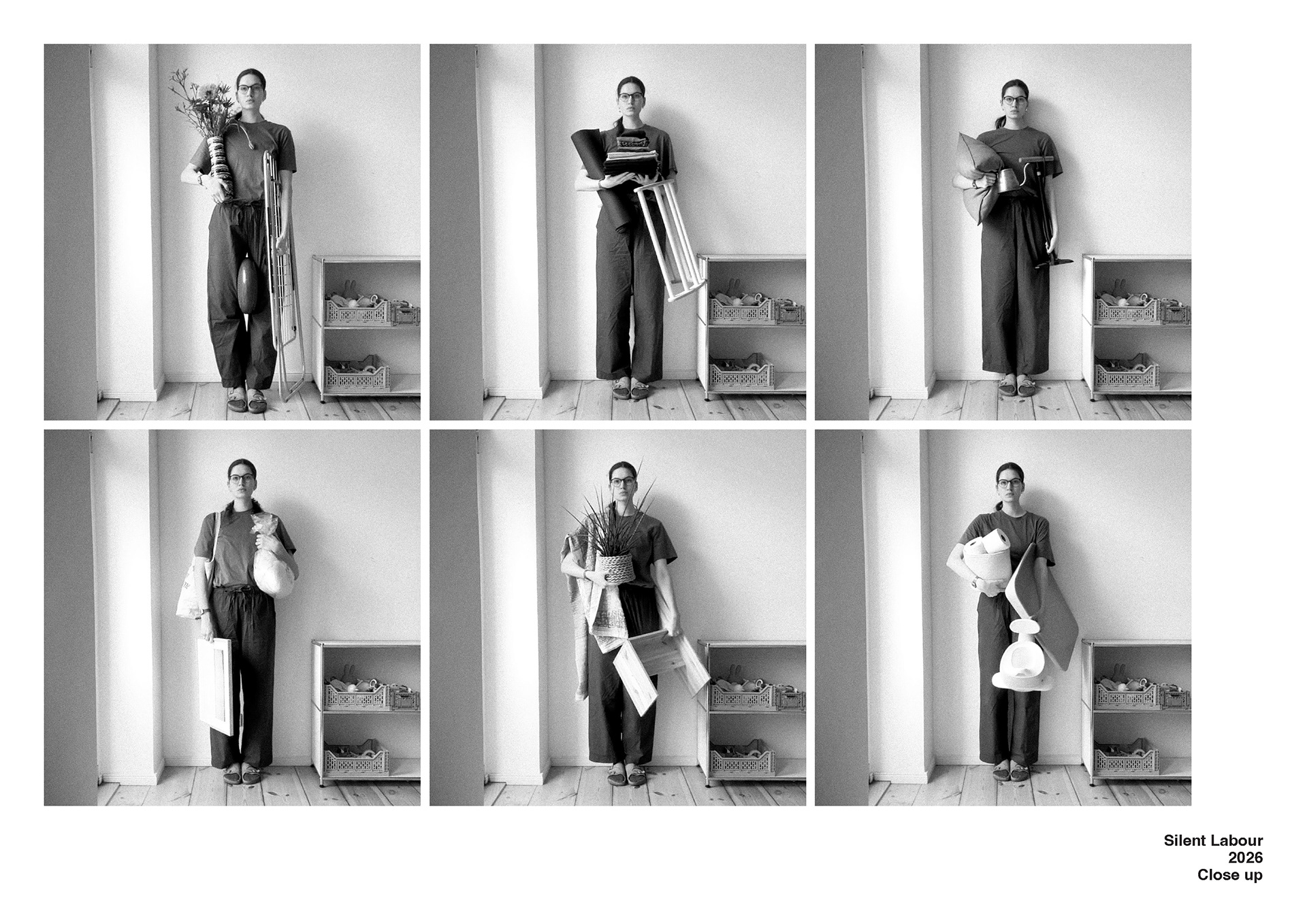
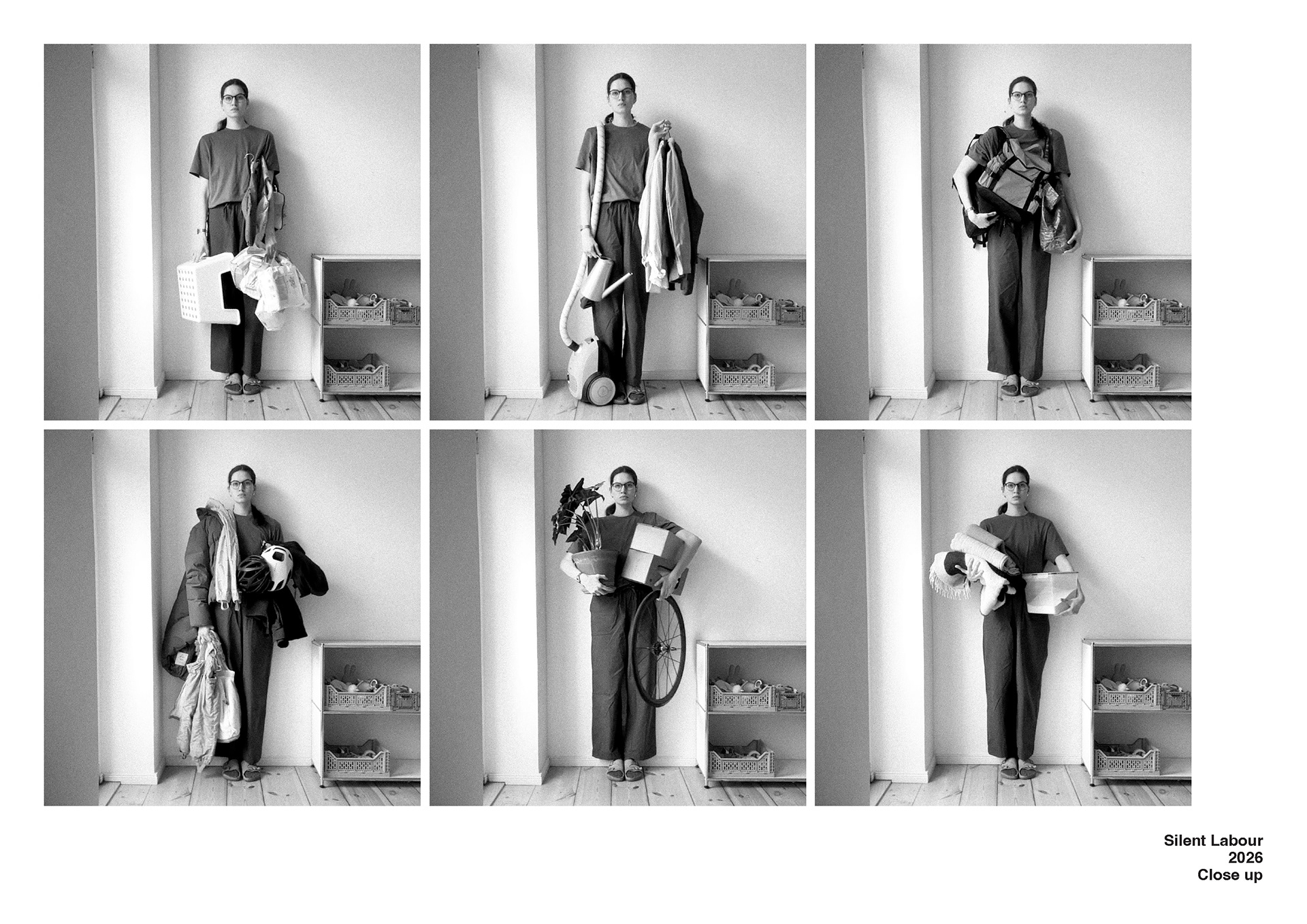
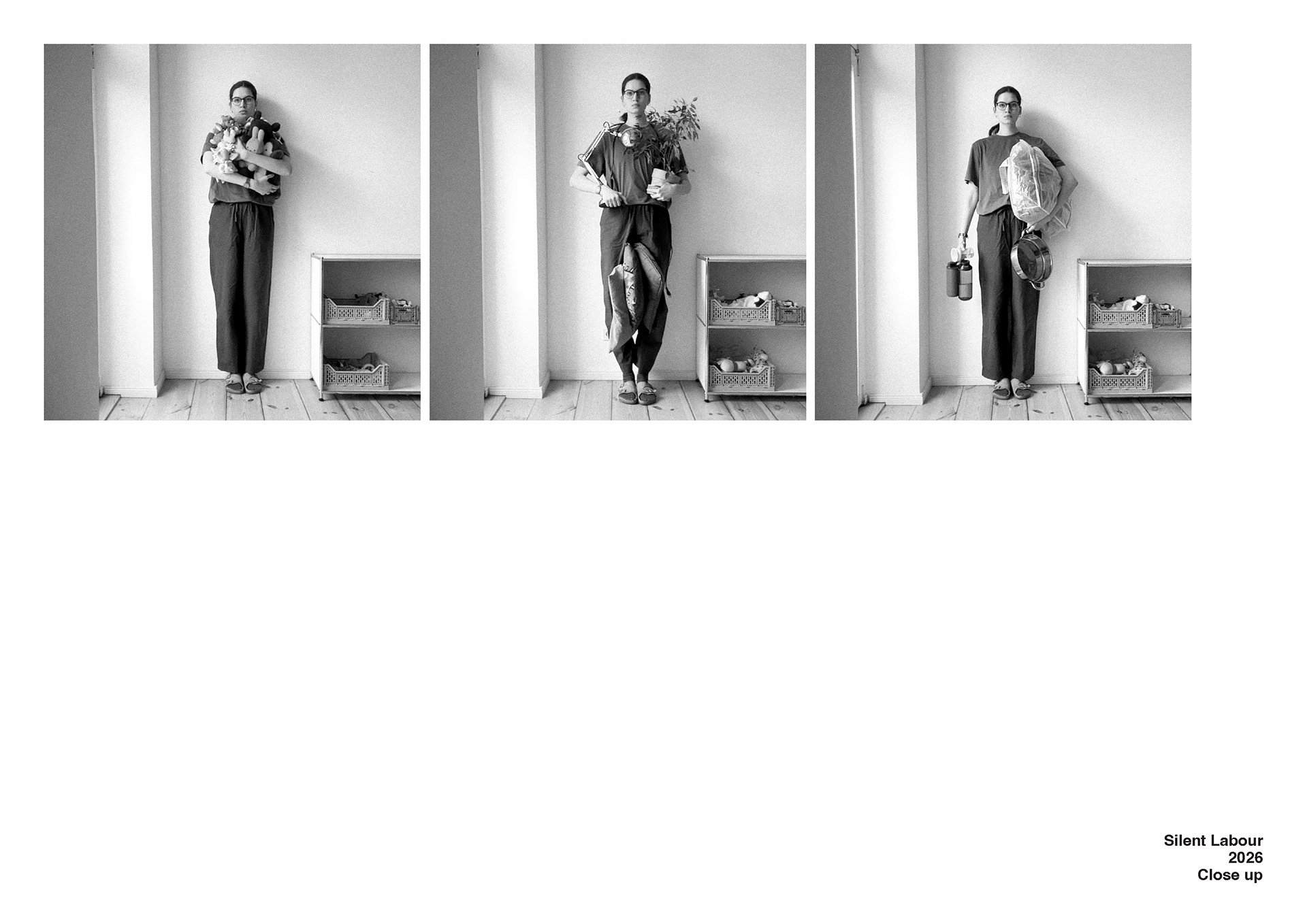
This photographic series approaches Gertrud Classen’s Aufbauhelferin not as a historical document, but as an enduring figure — a body that supports, stabilizes, and carries. Where Classen’s women rebuilt physical ruins, this work turns to the interior architecture of the home and asks what forms of reconstruction persist within domestic space. Across fifteen photographs, a woman stands against a wall, facing the camera, holding different objects: a diaper changing table, a potty, pots, pillows, a lamp. These ordinary items function as fragments of an invisible infrastructure. They are traces of care, maintenance, and reproductive labour — the work that sustains daily life. The figure remains still, almost column-like, recalling both monument and support structure. She appears at once contained by the wall and necessary to its stability. The series does not dramatize hardship; instead, it insists on continuity. The home emerges as a site of constant production — of nourishment, comfort, cleanliness, and upbringing — sustained through forms of labour that are largely unpaid and naturalized. By isolating the body and the object against the flat surface of the wall, the photographs construct a typology of support: a visual index of the feminized body as infrastructure. In dialogue with feminist and materialist critiques of social reproduction, the work reflects on how care labour remains structurally undervalued and absorbed into the private sphere. It asks what holds the home together, how such labour becomes invisible, and how photographic representation might shift the politics of attention toward what is usually taken for granted.